THE TEEN EDIT
Every client starts with a full skin assessment where we look at your acne type, triggers, current routine, and overall skin health. From there, we build a customized plan designed to calm active breakouts, prevent future acne, and protect your skin long-term.
Your journey may include a combination of targeted treatments such as deep cleansing facials, enzymes, chemical peels, or advanced options like microneedling — all introduced at the right time, based on how your skin responds.
But here’s the part most people miss:
real results don’t come from one treatment.
Consistency, proper home care, and a structured plan are what transform your skin — and that’s exactly what we focus on here.
-
Every skin journey at Acne Edit begins with intention — not guessing.
Frist we start with a Consult + Skin Assessment: We take a deep look at your skin, not just the surface. This includes identifying your acne type, triggers, current routine, and how your skin is actually behaving — not what TikTok told you it was doing.
Customized Treatment Plan: No two clients are the same, so your plan shouldn’t be either. You’ll receive a fully customized approach that includes both in-clinic treatments and a results-driven homecare routine. Why? Because your skin responds differently than the next person’s — and treating it like everyone else’s is exactly how people stay stuck.
Homecare + Consistency: This is where the magic actually happens. Treatments support the process, but your daily routine is what builds real, lasting results. With the right products and a structured plan, we focus on creating clear, healthy skin that doesn’t just look better for a week — it stays better.
-
Teen acne is driven by hormonal changes, increased oil production, and lifestyle factors — not poor hygiene.
At Acne Edit, we focus on gentle, corrective treatments that work with the skin — calming inflammation, clearing congestion, and protecting the skin barrier during these formative years.
Depending on your skin’s condition, your customized plan may include:
Enzyme treatments to gently exfoliate and boost skin function
Oxygen treatments to calm inflammation and target acne-causing bacteria
AHA/BHA chemical peels to clear congestion, improve tone, and prevent breakouts
Nanoneedling to enhance product penetration and support overall skin health
Microneedling for advanced correction, including acne scarring and texture
More advanced peels introduced gradually when the skin is ready for deeper correction
✨ Every treatment is introduced strategically and progressively — never all at once, and never before your skin is ready.
-
Teen acne isn’t random — and it’s not something you just have to “wait out.”
During the teenage years, hormonal changes increase oil production in the skin. This excess oil, combined with dead skin buildup and acne-causing bacteria, leads to clogged pores, inflammation, and breakouts.
But here’s where most people get it wrong:
it’s not just hormones.Acne can also be triggered or worsened by:
Incorrect skincare (too harsh, too stripping, or pore-clogging products)
Over-cleansing or over-exfoliating
Sweat, sports, and not cleansing properly after
Hair products transferring onto the skin
Diet and certain supplements
✨ Acne isn’t a one-size-fits-all condition — which is exactly why treating it like one keeps people stuck.
At Acne Edit, we identify what’s actually driving your acne so we can treat it properly — not just temporarily calm it.
The sooner acne is treated correctly, the lower the risk of long-term scarring and pigmentation.
-
Acne isn’t one single condition — and treating it like it is, is exactly why most people don’t see results.
At Acne Edit, we treat a wide range of acne types, each requiring a different approach depending on what’s actually happening in the skin.
We commonly treat:
Blackheads + congested pores
Inflamed acne (red, painful breakouts)
Hormonal acne (typically along the cheeks, chin, and jawline)
Cystic acne (deep, stubborn, and often recurring)
Post-acne marks (PIH) and lingering redness
Texture, scarring, and uneven skin tone
✨ No matter the type, the goal is always the same: calm inflammation, prevent future breakouts, and protect the skin from long-term damage.
👀 NOW ADD THIS (this is your sneaky genius moment):
Not sure what type of acne you’re dealing with?
Keep scrolling — below you’ll find visual examples of different types of acne to help you better identify what’s going on with your skin (or your teen’s).
Because the more we understand your acne, the better we can treat it.
Treating the wrong type of acne with the wrong products is one of the fastest ways to make it worse — which is why proper identification matters.
-
That’s completely okay — and honestly, it’s a great place to start.
We offer a curated selection of acne-safe, medical-grade skincare designed specifically for teen acne. Whether you’re just beginning your skin journey or prefer to focus on homecare first, you can shop our Teen Acne Edit for products that are safe, effective, and actually support clear skin.
✨ Every product is hand-selected to treat acne without damaging the skin barrier — because using the wrong products is one of the fastest ways to stay stuck.
-
sometimes: some cases, you may experience mild purging as the skin clears out congestion. This is temporary and part of the process. We guide you through every stage to keep your skin supported.
-
No — and this is one of the biggest misconceptions. Teen acne is primarily driven by hormones, oil production, and inflammation. Over-cleansing or using harsh products can actually make acne worse by damaging the skin barrier.
“How long will it take to see results?”
Most clients begin to see noticeable improvements within 4–8 weeks when following their customized plan consistently. Acne is a process, and results build over time — not overnight. -
No. Acne cannot be corrected with a one-time treatment, did the acne just show up overnight?
Real results come from consistency, proper homecare, and a structured treatment plan — which is why we offer acne treatments through our membership model.
-
Yes — when performed at the right time and on properly prepped skin. We only introduce microneedling when acne is controlled and the skin is ready for correction, such as treating acne scarring or texture. If we have reservations about it Nanoneedling is a great alternative.
-
Acne Edit is not a one-size-fits-all facial clinic.
We specialize in acne — meaning every treatment, product, and protocol is designed with acne-prone skin in mind.
Customized treatment plans — no guessing
Acne-safe, medical-grade skincare only
Focus on long-term results, not quick fixes
Ongoing support and guidance every step of the way
✨ This is a results-driven approach to clear skin — not a temporary solution.
Closed Comedones (Whiteheads + Blackheads)
These little bumps form when oil (sebum), dead skin cells, and bacteria get trapped inside the pores. Think of it like your skin’s natural traffic jam — everything’s trying to get out, but there’s a block at the exit.
When oil production speeds up (thanks, hormones ), and the skin doesn’t shed properly, pores clog and harden under the surface. This is called follicular hyper-keratinization — basically, the skin cells are sticking together when they should be falling off.
If you’re using occlusive products (heavy creams, thick makeup, or oily hair products), especially near the forehead, it adds another layer of congestion. And yes — hormones are the main characters here. When DHT and testosterone rise during puberty, they signal oil glands to go into overdrive, creating more sebum and more buildup.
So in short: excess oil + sticky skin cells + the wrong products = comedones waiting to happen.
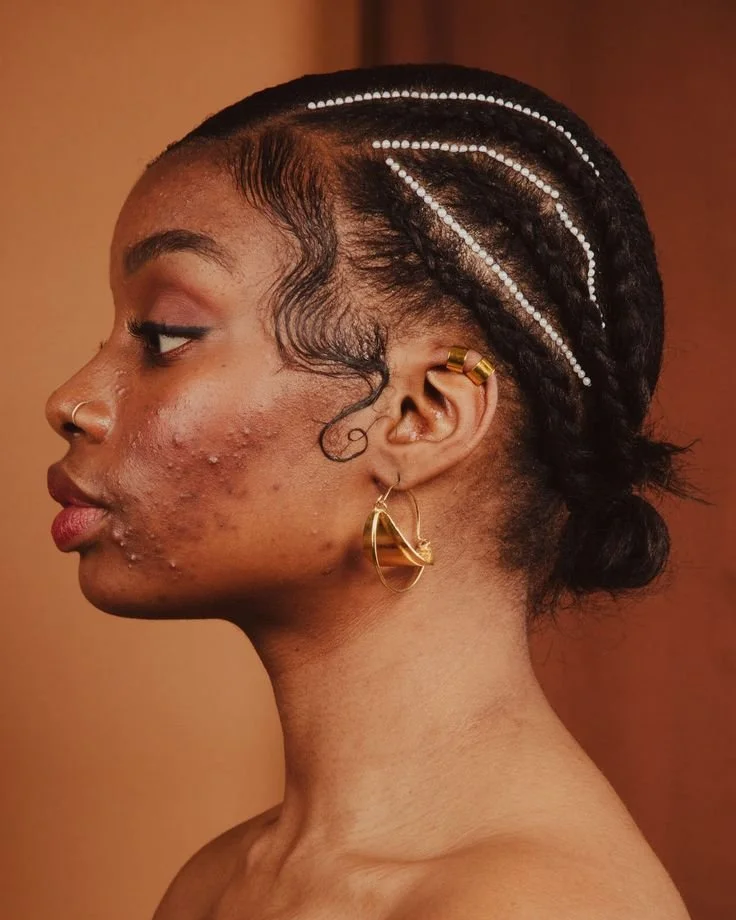
EDUCATION: what kind of acne is your teen struggling with?
Pustules + Papules (Inflamed Acne)
Now, when those clogged pores get invaded by bacteria (mainly Cutibacterium acnes), the body’s immune system freaks out a bit — cue the redness, swelling, and those angry, sore bumps.
Hormonal shifts turn your sebaceous glands into tiny oil factories, and when oil mixes with dead cells and bacteria, it creates inflammation inside the pore. That’s when you see the visible, inflamed acne most teens struggle with.
And let’s be real — add sweaty gym classes, makeup not made for acne-prone skin, or the classic “sleeping in your mascara” moment, and the skin barrier basically waves a white flag.
Teen acne isn’t just about oil — it’s a perfect storm of hormones, lifestyle, stress, and product choices. Getting it under control means calming inflammation, balancing oil, and choosing barrier-friendly skincare that works with your skin, not against it.
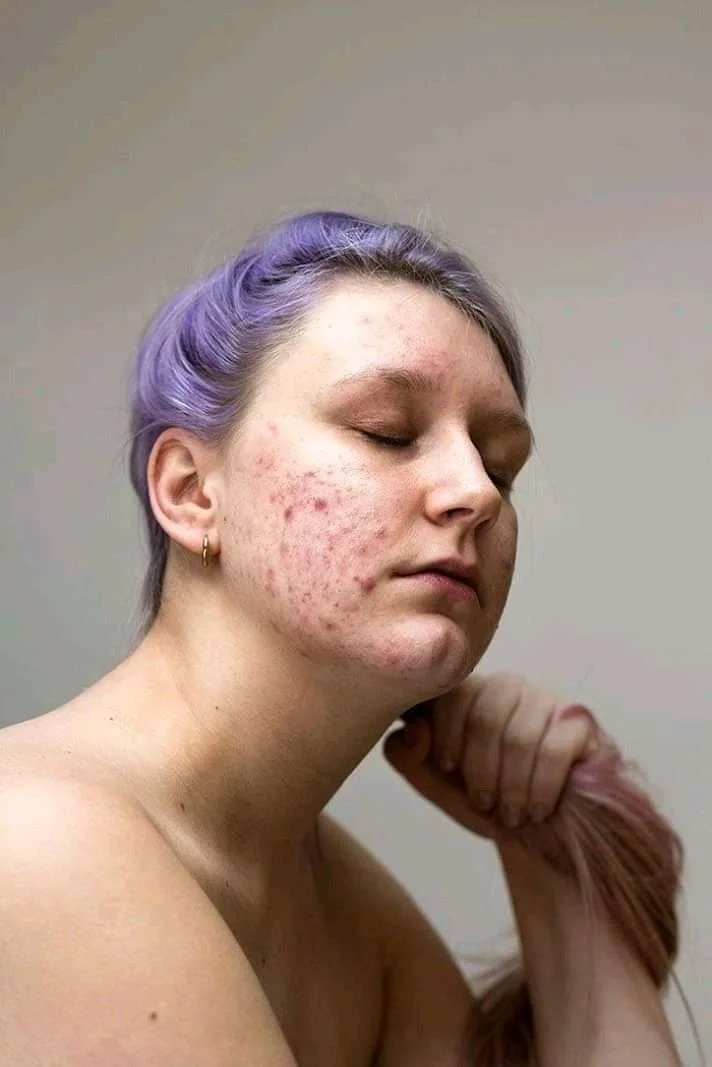
Fungal Acne (The Acne Imposter)
Let’s clear this up once and for all — fungal acne isn’t actually acne. It’s a yeast overgrowth, not bacteria. The scientific name is Malassezia folliculitis — and it happens when yeast that normally lives on our skin (like a chill roommate) multiplies out of control and starts inflaming the hair follicles.
This yeast feeds on oil, sweat, and humidity, which is why it loves showing up on your forehead, chest, back, and shoulders — basically anywhere warm and sweaty. Think gym class, tight clothing, or sleeping in sweaty PJs.
Here’s what’s really going on under the microscope:
Malassezia yeast eats the triglycerides (fats) in your sebum.
That process releases free fatty acids, which irritate the follicle wall.
The body’s immune system responds with inflammation — cue those uniform, itchy, tiny bumps that look like acne but don’t come to a whitehead.
To make it trickier, traditional acne treatments like benzoyl peroxide, heavy moisturizers, or certain oils can make fungal acne worse — because the yeast sees that extra oil as an all-you-can-eat buffet.
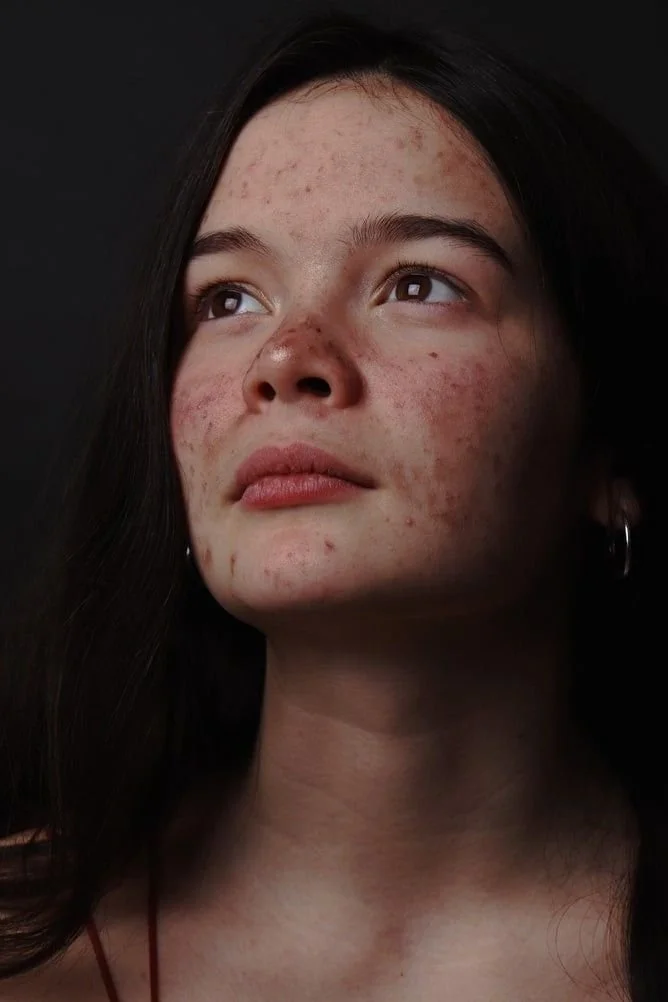

SHOP TEEN ACNE PRODUCTS

*A note to parents*
Teen acne isn’t just a skincare issue. It’s multi-factor- Hormones, stress, sleep, sports, diet… they all get a vote. If your teen is breaking out, don’t panic and don’t start playing “guess-the-product” every week.
 What they need is balance: acne-safe meals, real sleep, hydration, and a simple, consistent skincare routine that actually supports their skin — not overwhelms it.